
A Culinary Marathon in Cagliari, Sardinia
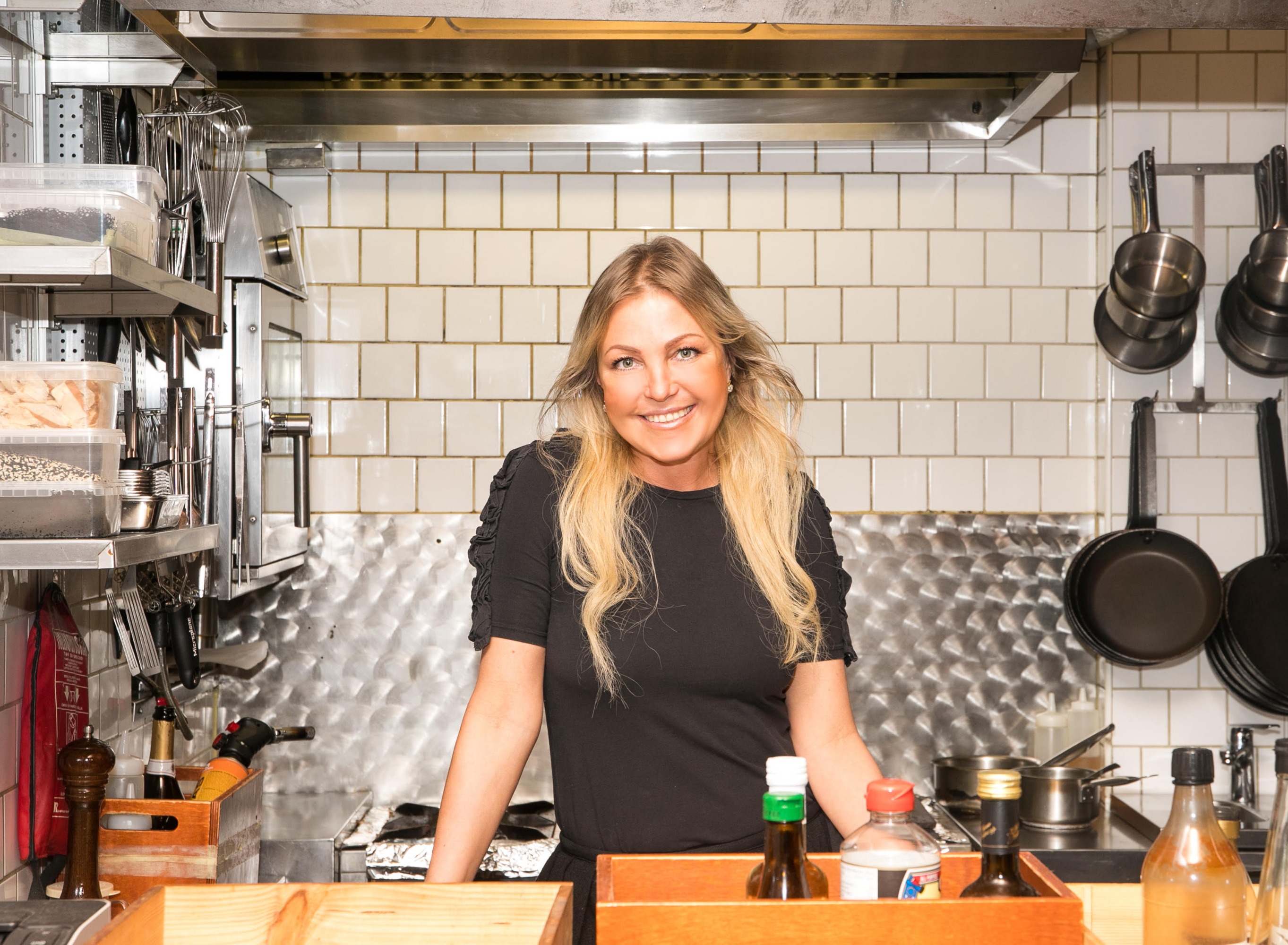
My restless soul demands its share, and my appetite for adrenaline-fuelled culinary adventures in different countries is nowhere near satisfied yet.
Some people save money to buy a car, some build a house or a summer cottage, some buy expensive clothes or things for their home, and some spend it making themselves more beautiful at a clinic somewhere. I don’t really fit into any of those categories. My vice – or perhaps my blessing – which may be slightly difficult for most people to understand, is my passion for travelling, discovering new flavours and spending the little money I earn on emotions, moments, adventures, people and, of course, food.
So there was an urgent need to find somewhere not too far away, but somewhere I hadn’t visited before. For some inexplicable reason, this autumn the compass once again pointed towards Italy. And when a combination of Wizz Air and Ryanair produced ridiculously cheap tickets, there wasn’t much need for deliberation. Cagliari and Sardinia were in the bag.
I’m not always the easiest travel companion for people who see food simply as something to fill their stomachs and consider searching for different culinary experiences – and spending money on them – the behaviour of someone who has taken a serious blow to the head.
This time, however, I owe a huge thank you to my extremely tolerant friend and her son, who cheerfully survived my culinary tour, and of course to my daughter who, fortunately or unfortunately, has also been infected by her mother’s bug.
Together, we turned our three days there into a genuinely entertaining culinary marathon – with some sunshine, sea, flamingos and a bicycle trip thrown in for good measure.
As I mentioned, this time we travelled with backpacks and budget airlines: Tallinn–Rome–Cagliari. The overnight airport transfer by taxi went quickly enough. The only surprise was discovering that Ciampino Airport is basically closed until 4 a.m. There are only a few benches outside and a small area where a surprisingly large number of people were sleeping on chairs, on the floor and pretty much anywhere they could find.
Security finally opened at 4:35 a.m., and by seven we were safely at Cagliari Airport in the early morning twilight.
Those little twenty-minute bursts of sleep had taken their toll, though, and once we got the keys to our apartment, we all collapsed for a few hours of well-earned beauty sleep.
Our accommodation was Sundira Traditional House, which I had chosen mainly for its location in the heart of the old town. In reality, it exceeded all expectations.
The apartment was right in the middle of Vico Vittorio Emanuele II – it would be difficult to find a better location – and the two large, spacious rooms with separate bathrooms, a kitchen and street-facing balconies were also better than expected.
If there was one thing to mention, it was the constant street noise. Every morning began at 7 a.m. with the street-cleaning vehicle, immediately followed by the rubbish truck. And the evening buzz showed little sign of ending before 2 a.m.
But we quickly got used to it, and before long we were sleeping with the balcony doors open without hearing a thing.
After all, it was our own choice to stay in such a location. In fact, watching the commotion from the window in the evenings and observing the bubbling, hot-blooded life of Cagliari was an absolute pleasure.
It inevitably made me think about our own beautiful old town back home and all the constant problems, complaints and grumbling surrounding it.
Dear people, where exactly should life happen if not in unique old towns – places that should bring fame and visitors to a country and add character to city life?
When choosing somewhere to live, surely you should choose according to the area and the level of noise you find acceptable, rather than simply picking somewhere pretty and then stubbornly demanding that the neighbourhood adapt entirely to your personal preferences.
Right. I seem to have wandered off topic.
Back to Cagliari.
The city is full of wonderful breakfast spots and coffee shops. Tiramisu iced latte, strawberry matcha, coconut matcha iced latte – each one almost a work of art in itself.
I definitely recommend stopping by Caffè dell’Arte and Eva’s Coffee.
Then there are croissants filled with pistachio cream or crème caramel, or perhaps a ring-shaped New York croissant drowning in chocolate.
Or maybe a Viennese-style café called 1901, with white tablecloths on the pavement tables, Eggs Benedict, fluffy pancakes with maple syrup, scrambled eggs with lightly salted salmon and avocado on brioche...
Or there’s the corner café Moca Domus, serving cappuccino in a waffle cup with caramel and cinnamon. And if an English breakfast feels too ordinary, have a bowl of polpette instead – delicious local meatballs coated in pancetta.
Breakfast prices are probably around the European average. Different coffees cost €2–6, croissants €2–3, and sandwiches and more substantial breakfasts around €6–12.
Early October is a fantastic time for a beach holiday in Cagliari if you’re arriving from Northern Europe. Temperatures are around 23–27°C, with perhaps a little more wind and a few more clouds than in August, but the water is turquoise, crystal clear and very warm. At least 25°C.
The beaches are slightly outside the city centre, and Poetto is certainly the best known and largest. Six kilometres of sandy beach lined with beach cafés – often with a DJ playing – and sun loungers available for those who want them.
Poetto is also an area where anyone looking primarily for a beach holiday could easily stay.
Since the old town is about a 15-minute taxi ride away and Uber isn’t exactly cheap, for a longer stay it would probably make sense to rent a car and explore the island a little.
Three days, however, is too short for that. It’s really only enough time to get to know one area.
For backpackers, there are trains around Sardinia as well, but a rental car is probably still the easiest option.
There is also a local taxi app called ITtaxi. It costs about half as much as Uber, but unfortunately getting a car can be surprisingly difficult. We managed it a couple of times, but most of the time the app simply kept spinning and the waiting time became ridiculously long.
Uber, on the other hand, arrives almost anywhere within two or three minutes – usually in a large, shiny car.
An afternoon can easily be spent walking through the most beautiful parts of the old town. From Piazza Yenne and the Bastione di Saint Remy viewpoint, you can continue up into the Castello district and visit the cathedral.
On your way down from the viewpoint, you’ll find a lovely pizza place called Plazuela, serving Sardinian artisan pizza made entirely from scratch.
And it’s probably quite different from whatever image of Italian pizza you have in your head.
Sardinian pizza is thicker and airy, oval in shape and almost reminiscent of a flammkuchen. Most versions come topped with fish or seafood, although pepperoni is available too.
My definite favourite was the anchovy pizza with capers and sheep’s cheese, although the tomato and tuna version deserves a mention as well.
Vermentino is Sardinia’s wine, so if you’re going to drink wine here, it might as well be a local Vermentino.
For our first evening, after going through various recommendations and stories, I had chosen a restaurant called Stella Marina di Monte Cristo.
Remember that name. There’s a longer story about it coming later.
Unfortunately, I hadn’t managed to make a reservation for that evening, so in good faith we marched over there at opening time – eight o’clock.
The moment I saw the old wooden door with the faded words “Monte Cristo” and absolutely no other indication that there was a restaurant behind it, I was sold.
I pulled open the door, which looked more like a garage door than the entrance to a restaurant, and the rustic atmosphere, dim lighting, simplicity and smell of food coming from inside instantly transported me into a state of bliss.
The place is run by two brothers, and I had been advised to ask for Signor Jacobo.
Signor Jacobo turned out to be a grey-haired gentleman in chef’s whites who stared at me thoughtfully and informed me in Italian that without a reservation, there was absolutely no chance of getting a table.
I tried pleading my case, explaining that I had come from a strange little place called Estonia, that I also had a restaurant and that I absolutely loved food.
He was already almost pushing me back out through the door when his brother appeared from the back, looked at us and apparently took pity on us.
The two exchanged a few words.
Then came the verdict:
Saturday. 8:30 p.m.
Be here!
Not far from the restaurant is another lovely Viennese-style café-restaurant called Antica, where the local cream of successful writers and artists seems to gather. Over a glass of local sparkling wine, there’s a good chance someone will start an interesting conversation with you about the important matters of the world.
Since our stomachs were still empty that evening, there were a couple of other restaurants just across the street, so we decided we might as well try a Michelin restaurant too.
On the same street you’ll find Luigi Pomata, which caught my attention because it had received Michelin recognition every year for 15 years.
The octopus main course was excellent, and the Moroccan-style pineapple dessert with cardamom and granita was delicious.
But somehow that real wow factor was missing.
The service was excellent, but perhaps after a while certain things begin to repeat themselves and the element of surprise simply isn’t quite as strong anymore.
I was actually more disappointed that we didn’t get to try porceddu, the traditional pig roasted with juniper and myrtle, which happened to be served at another restaurant nearby.
But you can’t eat everything.
Something has to be left for next time.
Day two began, naturally, with our morning wake-up call courtesy of the rubbish truck.
We spent the morning in full tourist mode, wandering through the obligatory shopping streets of the old town.
The children were delighted.
Then the time finally came to grab another taxi, this time heading to a small village called Sestu just outside Cagliari.
The long-awaited cooking school day had arrived.
In Sestu, Julia welcomed us into a ground-floor apartment with a terrace in the building that had belonged to her grandmother.
Julia had spent 12 years working in top restaurants in Milan before rediscovering her roots and her motivation in her grandmother’s home, where she now organises cooking classes and catering events.
From the very first moment she radiated positivity and enthusiasm.
Aprons on.
Time to dive into the secrets of Sardinian cuisine.
We made culurgiones – Sardinian ravioli filled with creamy potato, mint, garlic and Parmesan.
Silky tagliatelle made entirely from scratch, served with basil, chilli and Sardinian tomato sauce.
Then antipasti di terra, naturally including pane carasau, the local crispy flatbread; Pecorino Sardo; salsiccia di cinghiale, wild-boar sausage with fennel seeds; Prosciutto Crudo; Lardo and more.
For dessert came culurgioneddos – sweet culurgiones filled with sheep’s ricotta, lemon and orange zest and almonds, finished with local honey poured over the top.
Once again, absolutely delicious.
All of this in a homely setting, naturally accompanied by traditional wine and finished with mirto, the local myrtle liqueur.
And Julia’s little boy, with his sparkling eyes, boundless energy and sheer joyfulness, ended up winning everyone’s hearts.
I highly recommend including an evening like this in your travel plans.
It doesn’t have to be in Sardinia. Wherever your travels happen to take you, find a local cooking experience.
You’ll learn something – and you’ll come away with a serious dose of positive energy too.
Our final day was spent lounging on the beach again.
And incidentally, don’t expect miraculous service from the beach bars at Poetto.
What you can expect, however, is excellent seafood and very generous portions.
And as you may remember, Saturday evening had finally arrived.
Our long-awaited visit to Monte Cristo was about to happen.
We stopped by the apartment first to grab something warmer because the evenings get surprisingly cool, and then we set off far too early.
That was a mistake.
On the way, I spotted a tiny restaurant run entirely by one man. Somehow, miraculously, he managed to be both in the kitchen and serving the tables.
The best thing he offered was his homemade tagliere – a selection of artisan snacks arranged on a large wooden board.
Naturally, we couldn’t resist.
So we ordered one.
The place, by the way, was called Tacca.
One thing worth remembering: if you order a tagliere, it really is a VERY LARGE board.
And all those fermented vegetables, cheeses and other little delicacies were simply outstanding.
Long story short, by the time we finally arrived at the restaurant we had been waiting so long to visit, we were already fairly full. :)
But now we were inside.
And seated at the table.
Monte Cristo’s strategy is simple.
Every evening they serve a six- or seven-course menu. It isn’t advertised anywhere and you don’t know beforehand what you’re going to get.
The price of the menu is exactly €35.
Yes. €35.
There aren’t many questions, and there’s no wine list either.
Just one question:
Red or white?
A little bit about the restaurant’s history.
Stella Marina di Monte Cristo is one of Cagliari’s legendary restaurants, and its story is closely connected with Sardinia’s most famous footballer, Gigi Riva.
In 1990, after years of working in Milan, the Delano brothers returned to Cagliari and opened their restaurant in the Marina district.
Gigi Riva became a regular guest – practically a daily visitor – and after his death, a table in the restaurant was dedicated to him.
The restaurant is famous for its fixed, deeply traditional seafood menu, which has remained almost unchanged for years.
Anyway, we began with a magnificent seafood tagliere on a platter almost the size of a kitchen table in Mustamäe.
Razor clams, Venus clams, monkfish, giant prawns, fermented vegetables – everything beautifully seasoned and perfectly cooked.
Next came a tomato-rich, spicy fregola pasta practically drowning in tomato sauce.
Then an even larger platter appeared, quite possibly constructed from pieces of an old boat washed ashore from the sea.
Lightly marinated fruit, whole gilthead sea bream straight from the grill, crispy roasted squid, baby octopuses waving their tentacles...
Eventually, the entire group of us practically rolled out through the door, still smiling and not entirely sure what kind of wonderful game we had just been part of.
NB! They don’t serve coffee there. Apparently, Gigi was the only person who ever got one.
And they categorically refused to accept a tip.
Three days disappear incredibly quickly.
But you can do an astonishing amount in three days.
I haven’t even mentioned the flamingo park and our bicycle trip yet.
Bear in mind that you’ll be cycling around ten kilometres, and part of the route is proper off-road terrain.
Bicycles can be rented on site, and it might actually make more sense to keep one for the whole day – spend some time at the beach along the way and explore the surrounding area at your own pace.
As for the much-advertised flamingos, they didn’t exactly come very close. Most of the time you would have needed binoculars to see them properly.
But the few brave enough to venture closer looked like true queens in their delicate pink beauty.
And then, of course, there was Rumbu Tumbu. :)
I think every country has a Rumbu Tumbu somewhere.
We found ours on Poetto Beach, selling all kinds of random stuff.
Eventually, after finally accepting in despair that none of us were going to buy anything from him, he declared – deeply offended – that I was a “bad woman”.
And then he opened up.
He told us he was from Nairobi, Kenya, and with a huge grin announced that his name was Rumbu Tumbu.
He stayed with us for a while longer, telling funny stories, before finally wandering off across the beach singing:
Rumbu-Tumbu-Rumbu-Tumbu.
What incredible positive energy.
And what a fantastic mood it gave us for the rest of the day!
Three days really do disappear far too quickly.
But what an incredible amount of inspiration they can give you. :)
I’ll try to find a suitable day soon and bring a little piece of all of this back to you at Salt.
See you soon!


Comments